


How To Use Water Activated Kraft Tape
Complete Guide to Water-Activated Gummed Paper Tape
1. Characteristics and Classification of Water-Activated Gummed Paper Tape
1.1 What is Water-Activated Gummed Paper Tape?
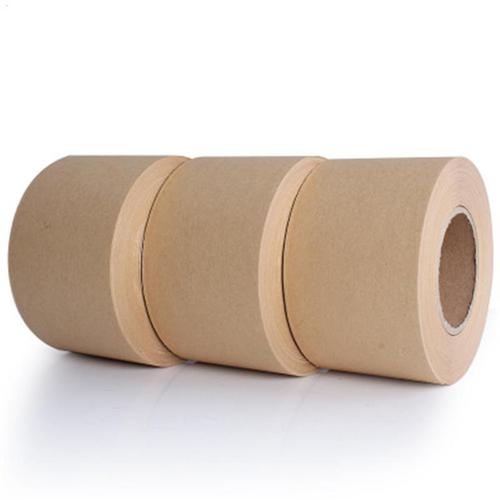
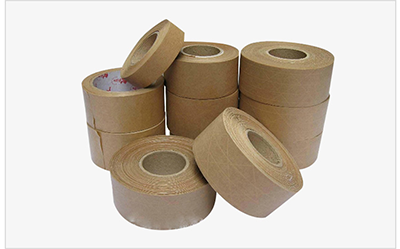
Water-activated gummed paper tape, also known in the industry as "water-activated fiber-reinforced kraft paper tape" or "water-activated tape," is an environmentally friendly adhesive tape product. It uses high-strength kraft paper as the backing material and modified starch (or corn-based adhesive) as the adhesive agent.
Unlike standard BOPP plastic packing tape, water-activated gummed paper tape is completely non-adhesive in its dry state. Its powerful bonding strength is only activated when the starch-based adhesive layer comes into contact with water. This unique design makes it the preferred material for international logistics and export packaging.
1.2 Categories of Water-Activated Gummed Paper Tape
Based on the backing material and structure, water-activated gummed paper tape is primarily divided into the following three categories:
Standard Water-Activated Kraft Paper Tape (Non-Reinforced)
Made from laminated kraft paper coated with starch adhesive. Suitable for lightweight packaging under 10 kg. The backing paper weight is typically 60-100gsm, with a thickness of about 80-150μm, and a tensile strength of ≥65N/IN.
Reinforced Water-Activated Gummed Tape (With Glass Fiber Threads)
High-strength imported glass fibers (in a diamond or longitudinal pattern) are laminated within the kraft paper backing, significantly increasing tensile strength to ≥170N/IN. Suitable for medium to heavy packaging of 10-20 kg. The backing paper weight is 90-142gsm, with a thickness of 140-170μm.
Perforated Water-Activated Gummed Tape
The adhesive side is perforated to allow for more uniform water penetration. Suitable for special applications like veneer repair, wood veneer splicing, and panel edge sealing.
1.3 Technical Parameters of Water-Activated Gummed Paper Tape
The following technical parameters are key indicators for assessing product quality when purchasing water-activated gummed tape:
| Parameter | Standard Type | Reinforced Type | Explanation |
|---|---|---|---|
| Basis Weight | 80-120gsm | 90-142gsm | Higher weight indicates thicker, sturdier paper. |
| Adhesive Type | Starch Adhesive | Starch Adhesive | Biodegradable, environmentally friendly adhesive. |
| Thickness | 110-170μm | 140-170μm | Reinforced type is thicker. |
| Tensile Strength | ≥65N/IN | ≥170N/IN | Reinforced type has over double the strength. |
| Holding Power | ≥10H | ≥24H | Longer duration of adhesion. |
| Elongation | ≥1.5% | - | Should not be over-stretched. |
1.4 Advantages of Water-Activated Gummed Paper Tape
Eco-friendly and Biodegradable: It is a green product. Both the backing and adhesive are non-polluting and can be recycled with packaging materials. During cardboard recycling, it does not require a "tape removal" step like plastic tape; it can be pulped directly, as the starch adhesive dissolves in the pulping process without creating residue.
Tamper-Evident and Anti-Theft: The tape fuses with the cardboard fibers upon drying, creating an irreversible bond. Any attempt to remove it will damage the cardboard surface or the tape itself (fiber tear), making it impossible to reseal without detection, effectively preventing tampering during transit.
Writable Surface: Information can be written directly on the tape surface with a ballpoint pen or marker, eliminating the need for additional labels.
Strong Weather Resistance: It maintains good adhesive properties in relatively cold environments and is not prone to becoming brittle.
1.5 Application Fields
Water-activated gummed tape is widely used in the following areas:
Logistics & Warehousing: Carton sealing, heavy-duty packaging, and bundling to ensure transport safety.
Export Packaging: Complies with international (e.g., EU, US) environmental standards, making it a requirement for eco-friendly export packaging.
Food Industry: Safe and environmentally sound, meeting food packaging standards. Can be used for sealing food boxes and bags.
Electronics: Effectively prevents static electricity and dust from entering packages, protecting sensitive components.
Industrial Manufacturing: Veneer repair, wood veneer splicing, panel edge sealing.
Appliance Manufacturing: Temporary fixation of parts during processes like refrigerator assembly.
Stationery & Books: Book repair and binding, safe for paper.
2. Preparations for Using Water-Activated Gummed Tape
2.1 Environmental Requirements
Usage effectiveness is closely tied to environmental conditions. Confirm the following before use:
Temperature: The optimal application temperature is 15-25°C (59-77°F). In low temperatures (<5°C / 41°F), adhesive activity decreases. Allow the tape and carton to acclimate to room temperature for over 30 minutes, or use warm water to activate. In high temperatures (>35°C / 95°F), the adhesive can become tacky too quickly; work swiftly.
Humidity: Humidity should be ≤60%. In humid environments (rainy days, basements), operate indoors in a dry area. Standard tape's adhesion decreases in humidity >60%.
Substrate Requirements: The carton surface must be clean, dry, and free of oil stains. Oil stains will isolate the adhesive layer from the substrate, and water stains will cause the kraft paper to become soft due to moisture absorption. The substrate moisture content should be ≤12%, with no damp feeling or softening when touched.
Special Note: Water-activated tape is designed for water-absorbent materials (such as corrugated cartons) and is not suitable for non-water-absorbent surfaces like plastic or metal. Laminated color boxes (smooth and shiny surfaces) are also not suitable, as they will not adhere properly.
2.2 How to Choose Tools For Water Actived Kraft Paper Tape
Select appropriate tools based on usage frequency and scale:
| Tool Type | Applicable Scenario | Operation Method |
|---|---|---|
| Manual Water Bottle/Sponge + Scissors | Low-volume, sporadic shipping (<50 boxes/day) | Cut tape, manually wet, and apply. |
| Brush + Tape Dispenser/Cutter | Small/Medium Warehouse (50-300 boxes/day) | Evenly apply water with a paintbrush, then apply tape. |
| Manual Tape Wetting Dispenser | Regular Use | Integrated water reservoir and cutter; tape is wetted as pulled. |
| Automatic Gummed Tape Machine / Hand-Held Taper | Assembly Line / High Volume (>500 boxes/day) | Automatically dispenses, wets, and cuts tape. |
2.3 Selection Based on Package Weight
Manufacturer-recommended selection standards:
Under 10 kg (22 lbs): Use standard water-activated kraft paper tape (non-reinforced).
10-20 kg (22-44 lbs): Use reinforced water-activated gummed tape (with glass fiber threads).
Over 20 kg (44 lbs): Recommend multi-layer reinforcement or an "I-beam" sealing method.
3. Standard Operating Procedure for Water-Activated Gummed Tape
3.1 Step-by-Step Operation
Based on manufacturer and user experience, the recommended procedure is:
Step 1: Cutting the Tape
Use scissors or a tape cutter to cut the tape to an appropriate length based on carton size. The length should be 5-10 cm (2-4 inches) longer than the surface to be sealed to ensure full coverage and allow for folding over edges. Avoid tearing by hand, as it creates uneven edges prone to splitting under stress.
Step 2: Evenly Applying Water
Use a brush (paintbrush), sponge, or damp cloth dipped in water to evenly coat the starch-adhesive side of the tape.
Key points for water application:
Adequate: The adhesive side should appear semi-transparent and glossy when wet, with no dry strips.
Avoid Excess: Do not let water drip or pool, as over-wetting makes the tape too soft and difficult to handle.
Avoid Insufficiency: Incomplete wetting prevents full adhesive activation.
Step 3: Positioning and Applying
Apply the wetted tape along the centerline of the seam, covering at least 2 cm (0.8 inches) on each side. Ensure the tape lies flat without wrinkles.
For carton sealing, it's recommended to seal the bottom first, then the top, and finally reinforce the side corners for complete closure.
Step 4: Compacting and Removing Air Bubbles
Firm compaction after application is crucial for a good bond.
Tool Choice: Use the palm of your hand, a rubber roller (for even pressure), or a flat, hard object (like a ruler).
Compaction Method: Press from the center of the tape outwards to expel air between the tape and the substrate.
Press Count: At least twice, focusing on the seam and tape edges.
Remove Excess Water: Squeeze out excess water by hand and wipe it away with a cloth.
Step 5: Drying/Waiting
The tape will completely bond to the surface as it dries. Full curing takes 1-2 hours (depending on ambient humidity). Do not move or stack packages during this drying period.
3.2 Special Sealing Methods
"I-Beam" Sealing Method: First seal the center seam (long side), then apply a strip at each end (short sides), forming an "I" or "H" shape. Suitable for heavy, fragile, or export goods to prevent side bursting. For items over 50kg, apply strips both horizontally and vertically, e.g., one horizontal strip every 30cm.
"L-Shaped" Reinforcement: Apply tape in an L-shape on carton corners, which are stress points prone to wear and tear. This helps distribute the force.
3.3 Application Direction and Wrapping Method
For Sealing: Apply tape along the centerline of the seam, covering ≥2cm on each side. Avoid applying it only to one side.
For Bundling Items: Use a spiral wrap, overlapping each turn by 1/2 the tape's width. Avoid parallel wraps, which can leave gaps.
4. Common Problems and Solutions
| Problem | Likely Cause | Solution |
|---|---|---|
| Tape Lifting/Not Sticking | Uneven water application; Dirty substrate; Inadequate compaction. | Ensure even, adequate wetting. Clean surface of dust/grease. Press edges firmly. |
| Air Bubbles | Tape not smoothed after application. | Smooth from the center outwards with a tool to eliminate bubbles. |
| Tape Breaking | Over-stretching (>5%); Low-temperature brittleness; Wrong tape type for weight. | Avoid over-stretching. Acclimate materials in cold weather. Use reinforced tape for heavy items. |
| Poor Adhesion in Winter | Low temperature reduces adhesive activity. | Use warm water (25-30°C) to activate. Acclimate tape and box to room temp for 30+ min. Use a heat gun on low setting from a distance. |
| Failure in Humid Conditions | High humidity prevents drying/proper bonding. | Apply tape indoors in a dry area. Use a water-resistant variant. Cover seam with waterproof sealant after application. |
| Adhesive Melting in Heat | High temperature softens adhesive. | Work quickly. Use a high-temperature resistant tape variant (withstands 120-200°C). |
5. Storage Guidelines for Water-Activated Gummed Tape
Proper storage ensures performance stability and extends shelf life.
5.1 Storage Environment Requirements
| Parameter | Optimal Condition | Precautions |
|---|---|---|
| Temperature | 10-25°C (50-77°F) | Avoid heat sources. High temps can cause adhesive to melt and blocks to fuse. |
| Humidity | 40%-60% RH | High humidity can soften the paper and deactivate the adhesive. |
| Storage Position | Upright (on end) | Avoid stacking flat to prevent compression and blocking. |
Special Reminder: Partially used rolls should be promptly placed in a sealed plastic bag to prevent moisture absorption and deterioration.
5.2 Handling Partially Used Rolls
Seal the cut end of a partial roll with plastic wrap or place the entire roll in a sealable bag to prevent the adhesive from absorbing moisture and collecting dust.
5.3 Periodic Inspection
For tape stored long-term (over 6 months), conduct a spot check every 3 months. Check if the kraft paper has softened or if the adhesive has become tacky or hardened. Replace if abnormalities are found.
5.4 Shelf Life
Water-activated gummed paper tape typically has a shelf life of 12 months. The starch adhesive layer may deteriorate in expired tape.
Summary
As an environmentally friendly, high-strength sealing material, the effectiveness of water-activated gummed paper tape is directly related to correct product selection, environmental control, and proper operation. Mastering the technical points outlined in this guide—from product choice and preparation to application, troubleshooting, and storage—will help you fully leverage the superior performance of this tape, guaranteeing the safety and quality of your packaged goods.
Furthermore, its eco-friendly characteristics align with modern society's demand for sustainable packaging materials, contributing to environmental protection efforts.
 Why does water-activated kraft paper tape warp when sealing boxes?
 How To Use Water Activated Kraft Tape
 How to Use Water-Activated Kraft Paper Tape in Winter?